Beyond Chatbots: Why Autonomous AI is Becoming the New Enterprise Standard
The era of simple Q&A bots is ending. Autonomous agents like EVAN OS are moving beyond conversation to active execution — completing complex business processes with minimal human intervention.
Shekhar Adhikari
CEO & Visionary
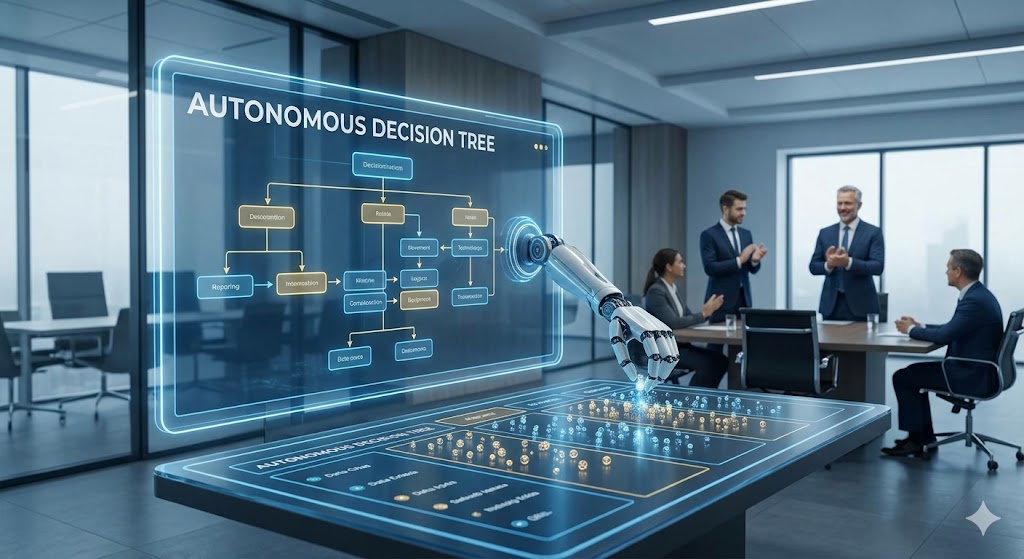
The Shift from Passive to Active AI
For much of the last decade, enterprise AI was essentially a sophisticated lookup engine. You asked a question; it retrieved an answer. These reactive systems — commonly called chatbots — have genuine utility: they reduce call centre volume, speed up information access, and free agents from repetitive queries. But they hit a hard ceiling. A chatbot can tell you your inventory is running low. It cannot place the restocking order.
That ceiling is now being dismantled by a new class of technology: Autonomous AI Agents. At Fagoon AI, we built EVAN OS specifically to operate beyond that boundary. EVAN OS doesn't just surface information — it takes action. It can navigate business software, make decisions within pre-approved guardrails, and complete multi-step workflows without a human directing each step.
Why Enterprises Are Making the Switch
The business case for moving to autonomous agents comes down to three compounding advantages:
- Speed at scale: Autonomous agents execute logic in milliseconds and can handle thousands of concurrent tasks simultaneously — a throughput no human team can match.
- Process elimination, not just process assistance: While a chatbot reduces manual effort, an autonomous agent can remove entire workflow stages. In fast-moving industries like property or financial services, that compression translates directly into competitive advantage.
- Accuracy gains: Removing manual data-entry touchpoints also removes the errors that come with them, producing cleaner data downstream and fewer costly corrections.
"The goal of autonomy isn't to replace people — it's to free them from the mechanical execution of processes, so they can operate at the level of strategy and judgment that genuinely requires a human mind."
What This Means in Practice
In markets where speed is the primary competitive lever — Sydney's property sector, Dubai's recruitment industry, high-volume SaaS support — the difference between a business running reactive AI and one running autonomous agents is increasingly the difference between winning and losing a deal.
As we move deeper into 2026 and beyond, the gap between these two camps will continue to widen. The strategic question for enterprise leadership is no longer "Can AI help us answer questions faster?" It is: "Is our AI capable of running our operations?"