Automating the Initial Interview: How AI Is Compressing Recruitment Timelines
The biggest bottleneck in high-volume hiring isn't the final interview — it's everything before it. NexJob is removing that bottleneck at the point of application.
Shekhar Adhikari
CEO & Visionary
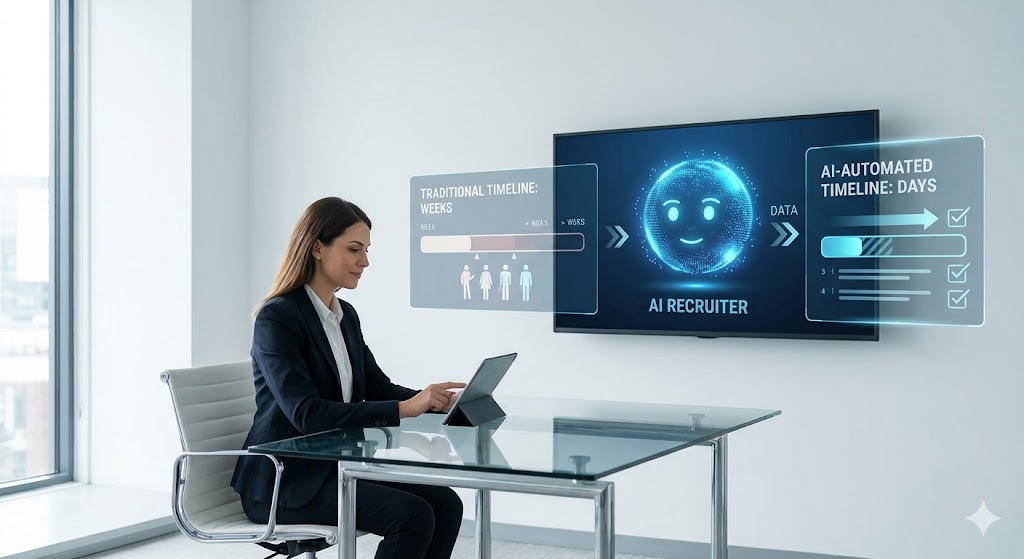
Where Recruitment Time Actually Goes
Most conversations about slow hiring focus on the decision-making stage — the final interview, the offer negotiation, the approval chain. In reality, the biggest time sink is earlier and more mechanical: reading through high volumes of applications, filtering for baseline requirements, and conducting the initial phone screen that determines whether a candidate advances at all.
In a competitive market, the cost of that delay is tangible. Strong candidates — the ones you actually want — are typically off the board within a week of starting an active job search. A recruitment process that takes three weeks just to produce a first-round shortlist will consistently miss them.
How NexJob Approaches It
NexJob, built on Fagoon AI's Nex-Engine, shifts the initial interview to the point of application. When a candidate applies, the system initiates a voice interaction that assesses technical fit, communication clarity, and alignment with the role's defined success criteria — immediately, without requiring a recruiter to be available.
The assessment is structured around the hiring team's own benchmarks, not a generic scoring rubric. The AI evaluates responses against the criteria the organisation has identified as predictive for that specific role, producing a ranked shortlist that reflects real fit rather than keyword density.
What Changes for the Recruitment Team
- Dramatically compressed timelines: The gap between application and meaningful assessment shrinks from days or weeks to minutes. Based on our deployment data, clients have seen significant reductions in time-to-first-interview compared to their previous process.
- More consistent evaluation: Every candidate is assessed against the same criteria in the same format, removing the variability that comes with different interviewers, different days, and different moods.
- Refocused recruiter effort: When the initial screening is handled systematically, recruiters spend their time on the conversations that require genuine human judgment — the top shortlisted candidates who are close to a hiring decision.
The recruiter's role doesn't disappear; it shifts upward. Less data entry and first-pass filtering; more high-stakes conversation with candidates who are already well-qualified. That's a better use of the expertise most recruitment professionals actually have.